
Bioidentical vs. Synthetic Hormones: What’s the Difference?

When patients consult with me seeking help for fatigue, weight gain, low libido, or mood swings, one of the first questions they ask is:
“What’s the difference between bioidentical and synthetic hormones?”
It’s a great question—and one that deserves a clear, no-nonsense answer.
Let’s break it down.
What Are Hormones Anyway?
Hormones are chemical messengers that regulate everything from metabolism and energy to sleep and sexual function. As we age—or due to stress, genetics, or illness—these hormone levels can fall out of balance, leading to symptoms that impact your quality of life.
Hormone therapy is designed to restore that balance, but the type of hormone therapy you choose matters.
What Are Bioidentical Hormones?
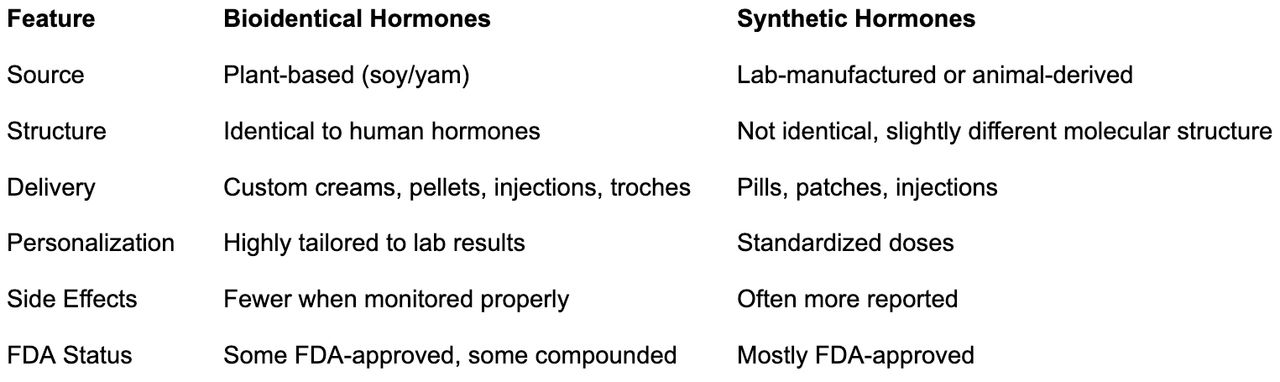
Bioidentical hormones are derived typically from plant sources (typically soy or yams) and are chemically similar and identical in structure to the hormones your body produces.
That means your body “recognizes” them, metabolizes them efficiently, and uses them as if it had made them itself.
Often used bioidenticals include:
- Estrogen (Estradiol, Estriol)
- Progesterone
- Testosterone
- DHEA and others
These hormones can be custom-compounded in a pharmacy based on your individual lab results, symptoms, and health goals.
What Are Synthetic Hormones?
Synthetic hormones are manufactured in a lab and do not exactly match human hormones at the molecular level.
They often have added chemical groups to improve shelf life or patentability.
You might recognize names like:
- Premarin® (conjugated equine estrogens—derived from pregnant mare urine)
- Provera® (medroxyprogesterone acetate)
- Testosterone
- Certain oral contraceptives
While they can be effective in symptom relief, synthetic hormones may interact differently with receptors and have higher risk profiles for some patients—especially long-term.
Key Differences at a Glance
What Does the Research Say?
More and more studies are confirming that bioidentical hormones may offer a safer, more effective alternative—especially when used under expert supervision.
Patients report better symptom control with fewer side effects, and lower risk of stroke, blood clots, and breast cancer in many cases.
That said, personalized care and proper monitoring are key no matter which route you choose.
My Philosophy as a Practitioner
After over two decades in this field, I’ve seen firsthand how tailored, bioidentical hormone therapy—combined with nutrition, lifestyle coaching, and stress management—can transform lives.
I always start with a comprehensive evaluation:
- Bloodwork (timed correctly)
- Full symptom review
- Family history
- Lifestyle and nutrition profile
From there, we build a custom plan that supports your body, not fights it.
Ready to Take the Next Step?
Start your Wellness Journey by clicking below.